Categories
Does LED Light Help Plants Grow? Science‑Backed Guide to LED Grow Lights
Wondering does LED light help plants grow? Learn how LED works for photosynthesis, difference between regular LED vs grow LED, key specs, common mistakes, and what to look for in quality horticulture lighting.
Aug 13th,2026
268 Views
If you grow plants indoors, in greenhouses, or low‑sunlight spaces, you have probably asked: Does LED light help plants grow? The short answer is yes — but not all LED lights are created equal.Standard household LED bulbs illuminate rooms for human eyes. Professional LED grow lights deliver the exact light wavelengths plants need for photosynthesis, seed germination, vegetative leaf growth, flowering and fruiting. This article breaks down the science, common misconceptions, practical tips, and what features matter most for your indoor garden.
 How LED Light Supports Plant GrowthPlants rely on Photosynthetically Active Radiation (PAR), the 400‑700 nm light spectrum that drives photosynthesis. Multiple wavelength bands work together to shape plant form and productivity:
- Blue light (400‑500 nm): Promotes compact, healthy leaf development and prevents stretching and legginess during seedling and vegetative stages, while supporting stomatal function for robust photosynthesis.
- Red light (600‑700 nm): Drives biomass build‑up, flowering, fruit set, and overall yield performance. Red alone can cause excessive stretching without proper blue‑light balance.
- Green light (500‑600 nm): Once thought useless for plants, it penetrates deep into dense canopies to power photosynthesis in lower‑layer leaves and reduces harsh light stress.
- White light: It is a blended mix of blue, green and red photons. It helps growers visually check plant health and pests.
- Far‑red light (700‑750 nm): Outside PAR range but biologically active. It modulates shade‑avoidance responses, expands leaf area and assists flowering timing; excess leads to lanky growth.
- UV light (320‑400 nm, mainly UV‑A with trace UV‑B): Triggers secondary metabolite production to enhance aroma, color and nutritional value for specialty crops. Too much UV will burn plant tissue, so only small fractions are used in horticulture lighting.
Quality LED grow lights tune their spectrum. Many modern full‑spectra models combine balanced blue‑red with supplemental green, far‑red and trace UV, supporting better plant morphology, resin production and stress resistance.Core advantages of LED grow lights over older lighting
- Low heat output: LEDs run much cooler than HPS or MH lamps. You can hang fixtures closer to plant canopies without leaf burn, perfect for tents, vertical racks and small rooms.
- High energy efficiency: More photons per watt of electricity, cutting long‑term power bills for hobby and commercial growers.
- Long service life: Premium horticulture LEDs deliver 50,000+ operating hours with slow light decay, meaning fewer fixture replacements year‑over‑year.
- Spectrum flexibility: Many units support dimming or channel switching to match vegetative or bloom phases of your crops.
Common Misconceptions About LED Plant LightingMyth 1: Any bright LED bulb will make plants thriveBrightness measured in lumens is for human eyes. For plants, PPFD (Photosynthetic Photon Flux Density) is the key metric — how many usable light photons land on your plant canopy per second. A bright household LED can score high lumens but low PPFD for crops.Myth 2: LED grow lights can fully replace sunlight foreverLEDs are an excellent supplement or substitute for no‑sun indoor environments. Nothing perfectly replicates natural sunlight. Where possible, combine natural daylight with artificial LED lighting for best results.Myth 3: Higher wattage always equals better growthRaw wattage tells you power draw, not real plant‑usable output. Pay attention to PPF and µmol/J efficacy. An efficient lower‑watt fixture can out‑perform a wasteful high‑watt cheap light.Practical Tips for Using LED Grow LightsEven the best fixture delivers poor results with wrong setup. Follow these basic rules:
- Hang height: Follow manufacturer recommendations. Too close = leaf bleaching / burn; too far = insufficient PPFD, leggy stretched growth.
- Photoperiod timing: Seedlings & veg‑stage plants often run 12‑18 hours on; flowering crops require proper dark cycles.
- Watch your plants: Yellowing, burnt tips mean too much light. Tall stretched stems mean insufficient photon intensity. Adjust height or dimming accordingly.
- Match coverage area: Make sure your LED’s effective footprint matches your actual growing space. Over‑driving a small fixture over a large canopy creates uneven growth.
What to Look For When Shopping for LED Grow LightsWhether you are a home hobbyist or run commercial greenhouse operations, prioritize these features:✅ Real‑world PPF & high efficacy (µmol/J rating) For specific details, you can refer to the article I wrote before. Based on the crops you grow and the size of your site,calculate how many watts and how many PPFD of light you need✅ Well‑balanced full spectrum covering veg through bloom cycles✅ Uniform PPFD distribution across the whole canopy✅ Reliable thermal design for slow light decay✅ 0‑10V dimming capability for tuning intensity for different plant stages✅ Durable build quality and solid after‑sales support
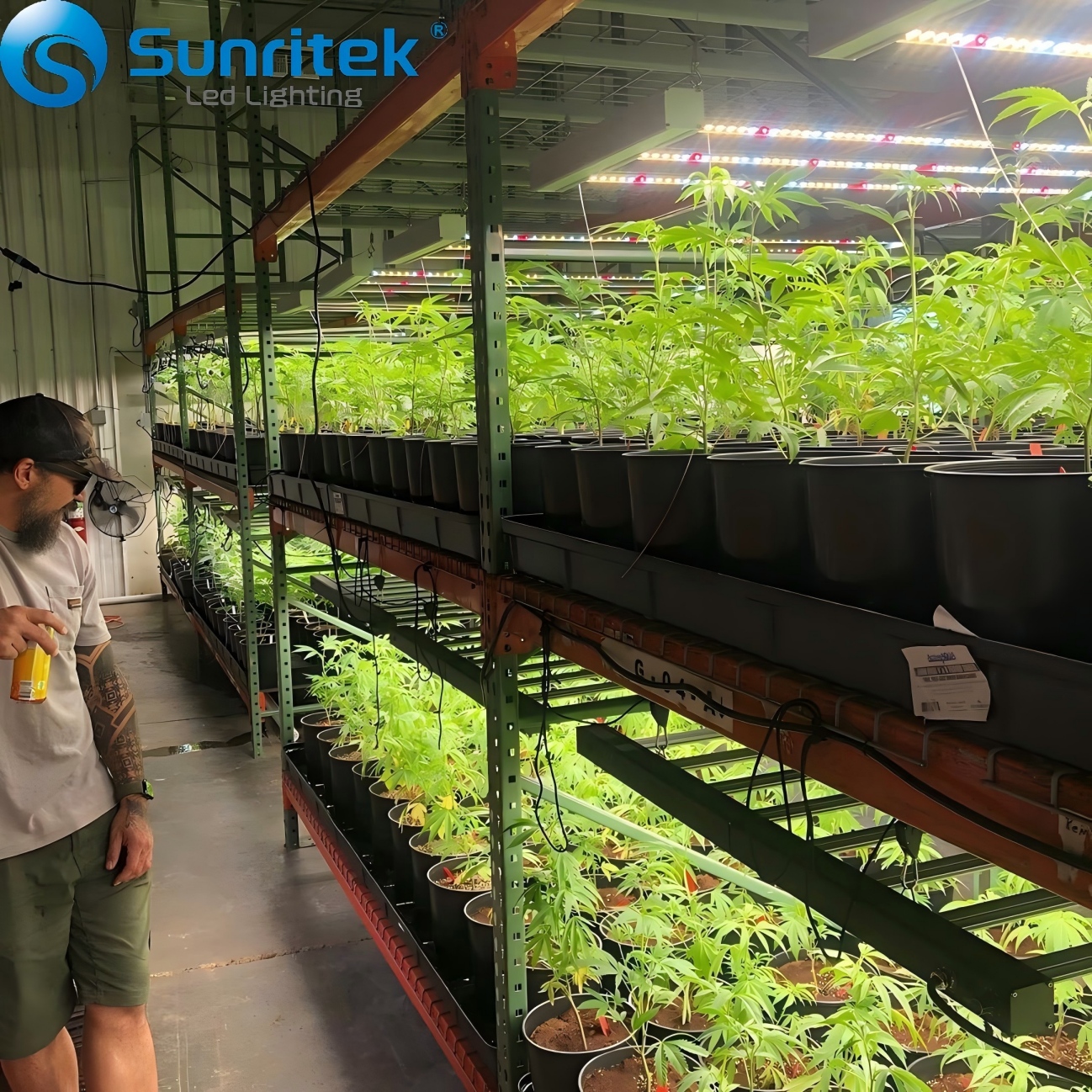
As a professional‑grade solution for both serious hobbyists and commercial growers, Sunritek features optics optimized for deep canopy penetration and uniform bed‑wide PPFD to reduce hotspots and inconsistent crop results. Paired top‑light and under‑canopy fixtures boost lower‑layer yields, while robust hardware and daisy‑chain capability suit humid large‑scale facilities. It delivers commercial‑tier performance with more favorable total‑cost‑of‑ownership.
As always, validate real‑world performance data against your growing setup before buying.Final Takeaway: Does LED Light Help Plants Grow?Yes, LED light absolutely helps plants grow — if you use purpose‑built horticulture LED grow lights. Generic household LED lights are not optimized for crop photosynthesis and will rarely support robust flowering or heavy yields.Understand PAR, PPFD, spectrum needs, and basic hanging / timing rules, and LED lighting becomes a powerful tool to extend growing seasons, unlock year‑round indoor gardening, and improve consistency for greenhouse crops.If you are upgrading your setup, compare real‑world performance data rather than marketing claims, and pick fixtures that match your plant types and physical grow space.
